
Business Resources
FIND INFORMATION AND GUIDANCE ON NEXT STEPS

Resources for You and Your Business
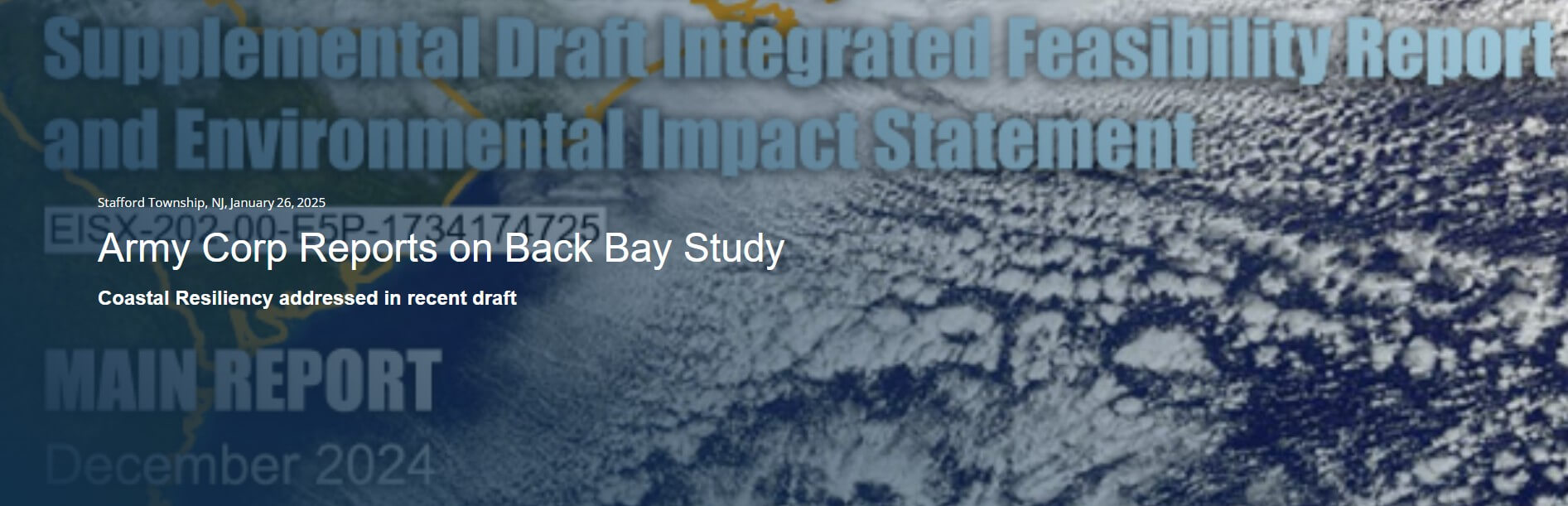
The U.S. Army Corps of Engineers has recently announced the release of a draft report for the New Jersey Back Bays Coastal Storm Risk Management Study. The draft report outlines an updated plan, which includes the elevation of approximately 6400 residential structures; floodproofing 279 critical infrastructure facilities (police, fire, ambulance, hospitals); and the implementation of nature-based solutions (using dredged material to enhance 217 acres of salt marsh habitat vulnerable to sea level change at 7 locations in the back bay area).
The U.S. Army Corps of Engineers has recently announced the release of a draft report for the New Jersey Back Bays Coastal Storm Risk Management Study. The draft report outlines an updated plan, which includes the elevation of approximately 6400 residential structures; floodproofing 279 critical infrastructure facilities (police, fire, ambulance, hospitals); and the implementation of nature-based solutions (using dredged material to enhance 217 acres of salt marsh habitat vulnerable to sea level change at 7 locations in the back bay area).
The Army Corps, in partnership with New Jersey Department of Environmental Protection (NJDEP), has been conducting the feasibility study within the New Jersey Back Bay area, defined as the network of interconnected tidal water bodies located landward of the New Jersey Ocean coastline in Monmouth, Ocean, Atlantic, Burlington, and Cape May Counties. The study area includes approximately 950 square miles and nearly 3,400 miles of shoreline across 89 municipalities. The objective of the study is to investigate problems and solutions to reduce damages from coastal storm-related flooding that affects population, critical infrastructure, property, and ecosystems. Engineering and economic analyses indicate the study area could experience $2.6 billion in average annual flood damages if no action is taken. The Southern Ocean County Chamber has been focused on sharing information regarding upcoming environmental regulations, including dedicating the keynote at their 111th Annual State of the Chamber Business Breakfast on January 31.
The Draft Integrated Feasibility Report and Environmental Assessment details extensive engineering, economic, and environmental analyses conducted to date as part of the study. Prior reports associated with the study outlined structural features, including three storm surge barriers and two cross bay barriers in addition to home elevations and floodproofing. The study team has pivoted from this approach to introduce a different plan that is more achievable in the near-term given the extensive engineering, environmental and technical analyses still needed on the potential structural measures. The science and engineering conducted to date on the storm surge barriers and cross-bay barriers remain valuable for a variety of purposes and can be revisited at future phase of the study.
The Army Corp notes that the plan is subject to change. It has not yet been approved by higher authorities, including Congress, and has not been funded for implementation at the federal or state level. The document is available online at the US Army Corps of Engineers Philadelphia District & Marine Design Center Website. To find out more on attending the January 31 event, or future Southern Ocean County Chamber of Commerce activities contact their Mill Creek Road office at 609 494 7211, or follow their communications on visitlbiregion.com
The Southern Ocean Chamber invites the community to learn how NJ's new regulations may affect local property at the January 30 State of the Chamber
The Southern Ocean Chamber has been tracking the NJPACT REAL rulemaking process since its earliest stages, keeping members informed as the state moved toward adopting new climate‑focused land‑use standards. With the rules now officially in place, the Chamber continues its commitment to helping the community understand what these changes mean for coastal regions and local property owners.
On January 20, 2026, the New Jersey Department of Environmental Protection adopted the New Jersey Protecting Against Climate Threats (NJPACT) Resilient Environments and Landscapes (REAL) rules, a significant update to the state’s land‑use regulations. These rules revise coastal, wetlands, flood hazard, and stormwater standards to incorporate current climate science, including projected sea‑level rise and increased flood risks, ensuring that future development decisions reflect evolving environmental conditions.
Although the REAL rules became effective immediately, the Department established a 180‑day transition period allowing certain qualifying applications to continue under the previous regulations.
For more information, click here.
The Southern Ocean Chamber has been notifying the business community on the ongoing changes that are taking place to in coastal community. These rulings and legislation have been taking shape for several years. It is critical that those that live, work and invest in a coastal area have an understanding on how it will affect property ownership or rentals both short and long term. The NJ Protecting Against Climate Threat Resilient Environments and Landscapes (NJPACT REAL) rules, introduced by the New Jersey Department of Environmental Protection (NJDEP), are achieving their goals to address climate change impacts in the state. For several years, NJPACT REAL integrates climate change considerations into regulations to enhance resilience and protect coastal areas. The key points include Sea Level Rise Projections, Coastal Erosion, and new regulatory processes that modifies land use regulations. As with CAFRA, The Resilient Environments And Landscapes proposal is not a law and can be reversed or adjusted by a future administration after it is adopted.
The focus has included recommendations and new rulings on stormwater management, safeguarding critical habitats and the impact on coastal communities. This calls for keeping people and property safe from flooding, erosion and sea level rise by updating flood zones and enhancing resiliency measures. To learn about this program and read the draft ruling,please visit the NJPACT official site. There are also calls for different flood measures to be put in place outlined in the 2021 Army Corp Back Bay Study. This study shows investment for flood mitigation that will also have lasting impact on property and the economy. The study is available onlinehere.This report outlines a ‘Tentatively Selected Plan’ framework, which includes three storm surge barriers, two cross-bay barriers, and the elevation of more than 18,000 structures to reduce the risk of flood damages associated with storm surge.
The Southern Ocean Chamber has several articles that have been posted regarding ruling, laws and resources to provide access businesses, residents and investors; see below.
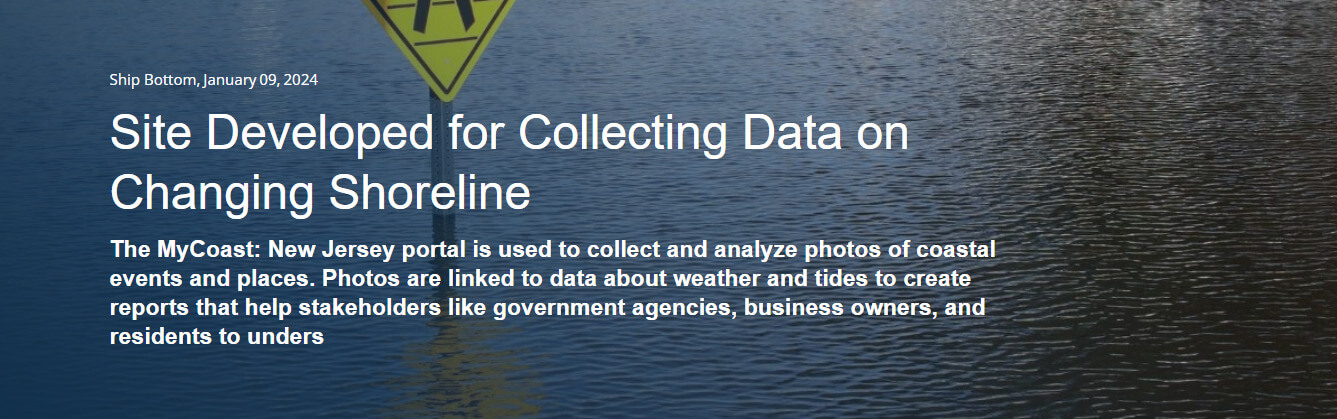
A portal to help local businessowners, residents, visitors and government better collect information about flooding and changing coastal landscapes. Funded by the National Oceanic and Atmospheric Administration, the New Jersey Coastal Management Program, Department of Environmental Protection in partnership with the Jacques Cousteau National Estuarine Research Reserve and Rutgers University Department of Marine and Coastal Sciences this application monitors and shares shoreline experiences.
New Jersey joins several coastal states such as Maryland, Massachusetts, Southern Carolina and New York in developing this project. The portal invites you to take a picture via the mobile app or submit it from your computer. The program's servers retrieve weather and tidal information to add context to the photo. Coastal leaders and groups can make use of the data in their decision making. NJ My Coast has a variety of online tools used to track flooding across the state, monitoring local tides, documenting coastal places, and sharing flood stories. To date there are 13290 people registered and 44107 photos submitted.
The coastal community is encouraged to document tides, storm damage, beach clean ups, abandoned boats and flooding incidents for collective reporting that could lead to long term solutions. To register or find out more regarding the My Coast program and what it means to New Jersey, please visit the website where you can also download the app.
On July 17, 2023, Governor Murphy signed a new flood disclosure law adopting the IFP Rule. The IFP Rule adopts amendments to both New Jersey’s Flood Hazard Area Control Act (FHACA) Rules, N.J.A.C. 7:13, and the Stormwater Management (SWM) Rules, N.J.A.C. 7:8, with the stated purpose of bolstering community resilience in the face of anticipated increases in the intensity of weather driven events,, as based on climate-informed data. This new ruling was drafted to update data and account for future increases in climate change-induced precipitation, and modernize flood mapping to account for current and future conditions.
- The new regulations expand the footprint of the jurisdictional floodplain and construction subject to the new regulations will have to be elevated by two feet over the previously-applicable requirement in accordance with the following:
- The new regulations raise the NJDEP 100-year design flood elevation (DFE) by two feet.
- The FEMA DFE has been raised by two feet for a total of a three foot overall increase above FEMA’s current 100-year flood elevation.
- Permit applicants may employ a licensed professional engineer to complete flood mapping in instances where the applicant disagrees with state and federal mapping or no FEMA or NJDEP flood mapping exists.
- All permits for new, reconstructed, enlarged, or elevated structures within a flood hazard area must additionally comply with applicable design and construction standards of the New Jersey Uniform Construction Code.
- The amended rules newly define “public transportation entity” and provide such entities with flexibility for railroad, roadway, or parking area projects where strict compliance with the new rulemaking may not be feasible.
In connection with the IFP Rule, NJDEP has launched a flood indicator screening tool to assist with providing information regarding the presence of indicators of potential flood risk on or near properties of interest that should assist seller and landlords in complying with the Food Disclosure Law and will also be of assistance to property developers in general. The interface maps the location of waterways, FEMA Flood Zones, State Flood Hazard Areas and associated Design Flood Elevation profiles, and provides information on New Jersey’s Tidal Climate Adjusted Flood Elevation, which depicts future sea-level conditions in tidal areas.
This new mandate makes New Jersey the thirtieth state to require such disclosures from landlords and property sellers, better informing renters and homebuyers of the flood risk they face. This information will be designed to assist renters and buyers decide if the risk is worth the cost, and if so, then consider purchasing the appropriate flood insurance to protect against costly out of pocket repairs.
Estimated costs for repair on homes and property has driven multiple reports and studies. The bill moved through each house of the legislature garnering unanimous approval before receiving modifications was signed into law by Governor Murphy. The legislation addresses the concerns by listing the information that property sellers must give potential buyers instead of containing a general mandate to disclose flood risk. Sellers would have to answer specific questions such as whether a property is in a federal flood zone, whether it has experienced flood damage and whether the owner has received any federal flood assistance.
To prepare New Jersey from threats by climate change impacts such as rising sea levels, more intense and frequent storm events and flooding, and increasing temperature. The effects of these impacts present real threats to the economy, environment and public health and safety of all New Jerseyans.
In 2020 the New Jersey Department of Environmental Protection (DEP) began a regulatory reform effort to help reduce greenhouse gas (GHG) and other climate pollutant emissions while making our natural and built environments more resilient to the impacts of climate change that are now unavoidable. These reforms represent New Jersey protecting against climate threats (NJ PACT), a partnership with New Jerseyans to help both stave off the worst impacts of climate change and adapt to unavoidable impacts already occurring across the State.
Summer 2023 NJDEP is expected to present their Phase II Regulations on Coastal Communities. The Southern Ocean Chamber and other business organizations have been following this advancement since it's initial launch. The state has drafted a 1200 page document, that will be published in the New Jersey Register. Once they are published there will be a period of public comment. There has been discussion that NJPACT recommendations include requiring the new and renovated homes to be elevated an additional five feet, state regulation of the inundation risk zone and expansion of the flood area beyond what has been defined by FEMA. Anticipated timeline from December 2022 REAL webinar document show File Proposal 2023 - Adopt new rules Q1 2024.
New Jersey Protecting Against Climate Threats (NJ PACT) Under Governor Phil Murphy's Executive Order 100, the New Jersey Department of Environmental Protection (DEP) is reforming regulations that will help reduce greenhouse gas (GHG) emissions while making our natural and built environments more resilient to the impacts of climate change that we cannot avoid. These reforms represent a PACT with the residents of New Jersey to help them adapt to the reality of climate change. It is also a PACT across generations -- with our children and grandchildren – to reduce further climate change damage so that they too may thrive and enjoy our great state.
The first two PACT initiatives include: 1. Modernizing environmental land use rules to respond to climate change by considering risks such as sea level rise and chronic flooding, and to facilitate climate resilience by supporting green infrastructure and renewable energy and 2. Strengthening air pollution rules to help reduce future greenhouse gas emissions by improving the State's GHG reporting and inventory system and reducing emissions of carbon dioxide and short-lived climate pollutants from certain sources.
NJ PACT is just one of many DEP climate change initiatives. In addition to the PACT rules, DEP is leading several climate change initiatives that have recently delivered the following reports:
• Sea Level Rise Guidance for New Jersey describes how sea level rise data can be used in making development decisions.
• Global Warming Response Act 80x50 Report describes New Jersey's emissions profile by sector and identifies choices available to lawmakers and policymakers to ensure that New Jersey reaches the GWRA mandate of reducing emissions by 80% by 2050.
• Scientific Report on Climate Change summarizes data that illustrates how New Jersey experiences climate change.
• Statewide Climate Change Resilience Strategy presents a roadmap for reducing the impacts of climate change through adaptive policies that improve the resilience of New Jersey's economy, communities, infrastructure, and natural resources. A living document, the Strategy responds to evolving science and provide guidance to State agencies, local government units and regional planning agencies. The strategy also includes a Coastal Resilience Plan to inform and guide the State’s priorities, policies, regulations, resource allocation, and funding in the coastal zone.
Some examples for Coastal Inundation (Flooding) Risk Zone:
Buildings ▪ New buildings would require a hardship exception. ▪ Applicant must demonstrate that there is no other reasonable use for the site and that preventing construction of a new building would constitute an exceptional and undue hardship. ▪ New and substantially damaged/improved residential buildings would need to be elevated to new Climate Adjusted Flood Elevation (CAFE)+1. ▪ Nonresidential & non-critical buildings can be flood-proofed to CAFE+1 if elevating is impracticable. ▪ Applicant must provide an Owner Certified Climate Risk Assessment that acknowledges the flooding risks. ▪ Deed notice required, summarizing flooding risks (both present and future)
For details, recorded sessions and timelines, visit the NJPACT site here
